Dude, where’s my Figma?
I’ve had the pleasure of working with two long-term clients for years now. When the projects started, AI tools already existed, but they weren’t really part of the process. In our eyes, they were gimmicks that couldn’t even count the R’s in “strawberry”.
Now, in the fall of 2026, the way I work on those very same projects has completely changed. The products run locally on my computer as code, with the real components and real data. When we want to change or add something, I make the changes locally by prompting. Once I’m happy with them, they go to GitHub and on to a demo server for the client to see. Figma is still there, and Claude keeps it synced with the latest changes in the background, so everything I see in code I could also see and edit there. It just has a different role now. Figma used to be my workspace. Today it’s basically a documentation tool.
You’d expect drama and friction from a shift like that. Turf wars, or someone feeling like their job got stolen. There hasn’t been any. The developers still write quality code; their tools have just changed. And I still design components, screens, flows and user experiences. My tools have changed, too.
Remember the good old days?
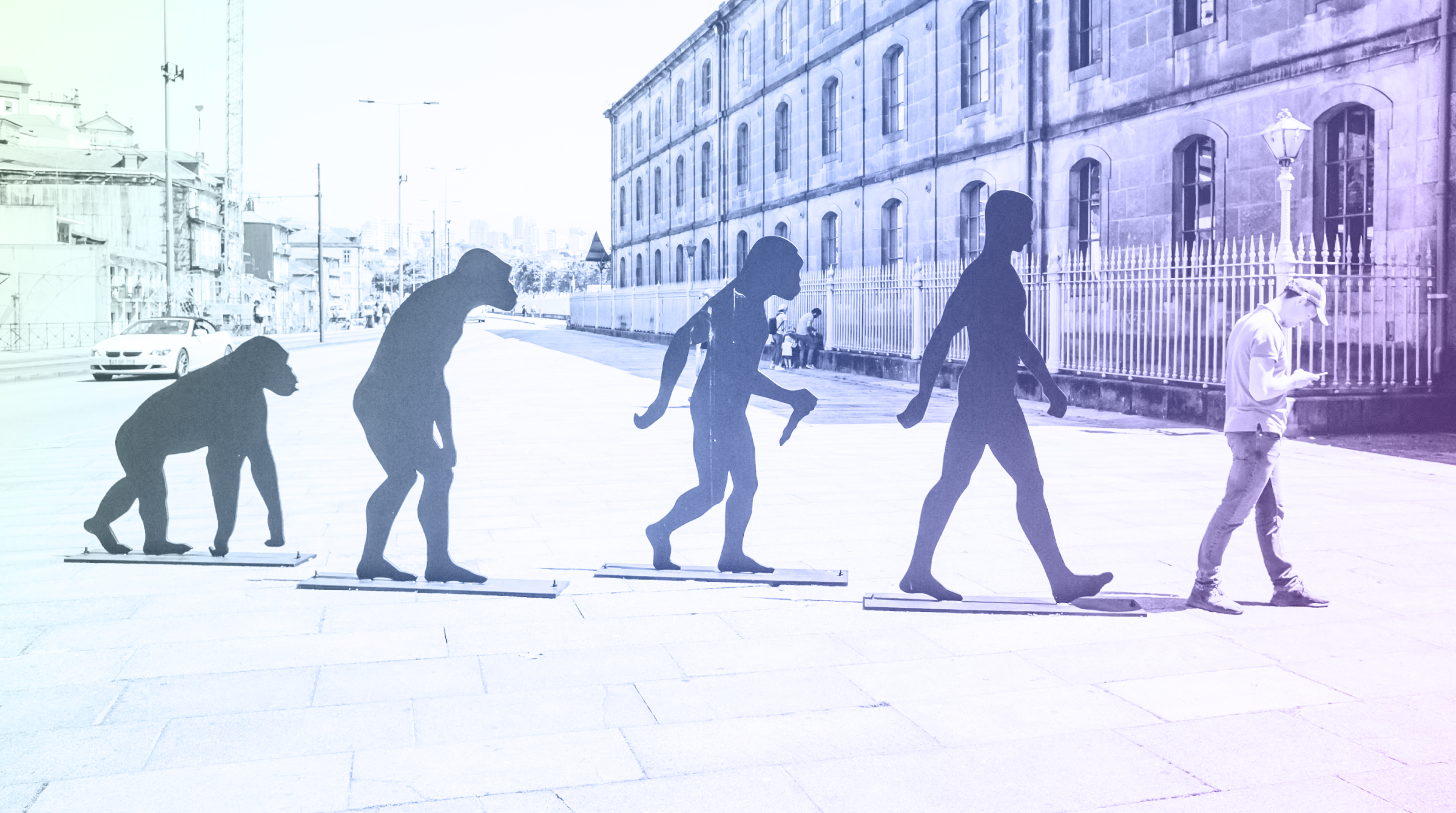
I’ve been in this business for almost twenty years, and my tools have changed completely five or six times. I started with XHTML, CSS 2.0, Notepad++ and FrontPage Express. The good old days of frames within frames and <blink>. Then came the Adobe era, with UI design happening in Illustrator and Photoshop. Sometime in the 2010s, dedicated UI and prototyping tools arrived: XD, Sketch, Zeplin and the like. Then Figma. And now the tool of the trade is AI.
So, is this time different? Maybe. The change is at least faster, and it touches everyone at once, not just designers. The designer writes code, the product owner prototypes, the developer sketches UIs. And when everyone can do a bit of everything, and everything keeps speeding up, the frameworks we’ve adopted to coordinate our work start to wobble too.
New tools, same old questions
But even though the tools and processes have changed, the thinking behind the products has stayed largely the same. So have the questions we ask in our projects.
Does this work? Is it nice and intuitive to use? Why would anyone care about this? Where’s the value? Does this whatever we’re building actually move the organisation closer to its goals?
Those are the hard questions we’re still working on, and I expect we’ll keep working on them for a long time to come. The tools only change how we find the answers.
Chaos is me
Right now, everything feels a bit chaotic. Any consultant worth their fee would probably call this a “paradigm shift”. Something big is moving under our feet, and anyone who claims to know exactly where we’re heading as an industry is probably trying to sell you something.
I’m not smart enough to see exactly where this is going. But I’m smart enough to know it won’t stay the way it is today, and it certainly won’t go back to the way it was yesterday.
And to anyone convinced AI is about to take their job, I’d say this: I think you’ve got it backwards. If I were still using the tools I worked with fifteen years ago, I wouldn’t have a job right now. The tools changing has never been the threat. Standing still is. It’s a designer’s job to roll with the punches when the tech takes a leap forward. Keep moving, or you might be in trouble.