Creating the #1 key management software in Finland
Case: LokiTime
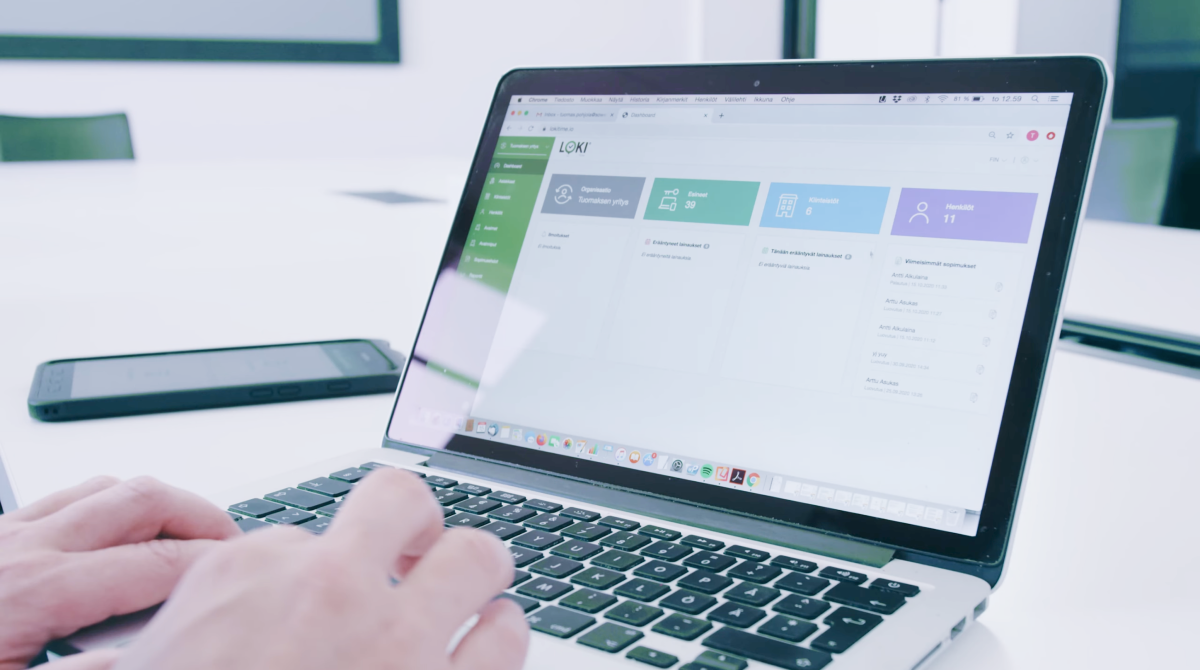
LokiTime digitalises key management for organisations, tracking which physical keys, laptops, phones, and other loanable assets are held by whom, and for how long. Kodan has been their development partner since 2019, rebuilding the platform from the ground up and continuing to develop it as the product and customer base have grown.
Compliance unlocked:
Finnish data residency and built-in NIS2 compliance opened the door to regulated and critical infrastructure customers.
Scaled without breaking:
Usage grew nearly 10x since launch, and the platform hasn't had a single interruption.
Beyond keys:
The same workflow now covers laptops, phones, and tools, not just keys, across Finland, Sweden, and Germany.
LokiTime's original MVP was built by an offshore team, and it proved the demand for the service was there. But as LokiTime moved into more regulated industries, the system couldn't keep up. A growing customer base also meant stricter requirements for data residency and security, and the MVP wasn't built for that level of compliance or scale.
LokiTime needed a development partner to rebuild the platform properly, take co-ownership of technical decisions, and get close enough to the business to understand it, not just the backlog.
The challenge
As the customer base grew to include enterprise and public sector organisations, requirements around data residency and compliance followed, and the existing platform wasn't built to meet them.
Operational complexity was rising too. Rental companies, shopping centres, security firms, and critical infrastructure operators all had meaningfully different needs, and the system had to serve them all without fragmenting.
Meanwhile, development cycles with the offshore team were slow, feedback loops were long, and visibility into real-world performance was limited.
The goal
The primary goal was to rebuild the platform in a way that could support regulated industries, specifically by ensuring Finnish data residency and compliance with NIS2 and related directives.
Beyond compliance, the aim was to create a stable and scalable foundation that could grow with the business, and to establish a development model where decisions could be made collaboratively and quickly.
The solution
Kodan and LokiTime began by agreeing to build a new platform rather than extend the existing one. After reviewing the original codebase, it was concluded that continuing to build on it wasn't the right path. A new foundation was needed.
The new platform was built on Google Cloud with Kubernetes, using Google's Hamina data centre to keep all data in Finland. This directly addressed the compliance requirements that had been blocking sales into regulated sectors.
Before writing code, significant time was spent on the process itself. How do organisations actually manage keys day-to-day? How does a new employee receive their assets? What happens when someone leaves? How should reminders work, and for whom? The answers shaped the product as much as any technical decision.
The existing customers were migrated from the old system one at a time, using a purpose-built migration tool that allowed each transfer to be manually verified. For users, the transition was smooth, with no data loss and no interruption to the service.
As usage grew and data volumes increased, the team invested heavily in monitoring and observability, with the explicit goal that Kodan should be the first to know when something was wrong, not LokiTime's customers. A feature flag system allowed new functionality to be tested with specific customers before wider release.
Results
Today, LokiTime serves customers across regulated and non-regulated industries in Finland, Sweden, and Germany, on a platform that has run without interruption since launch.
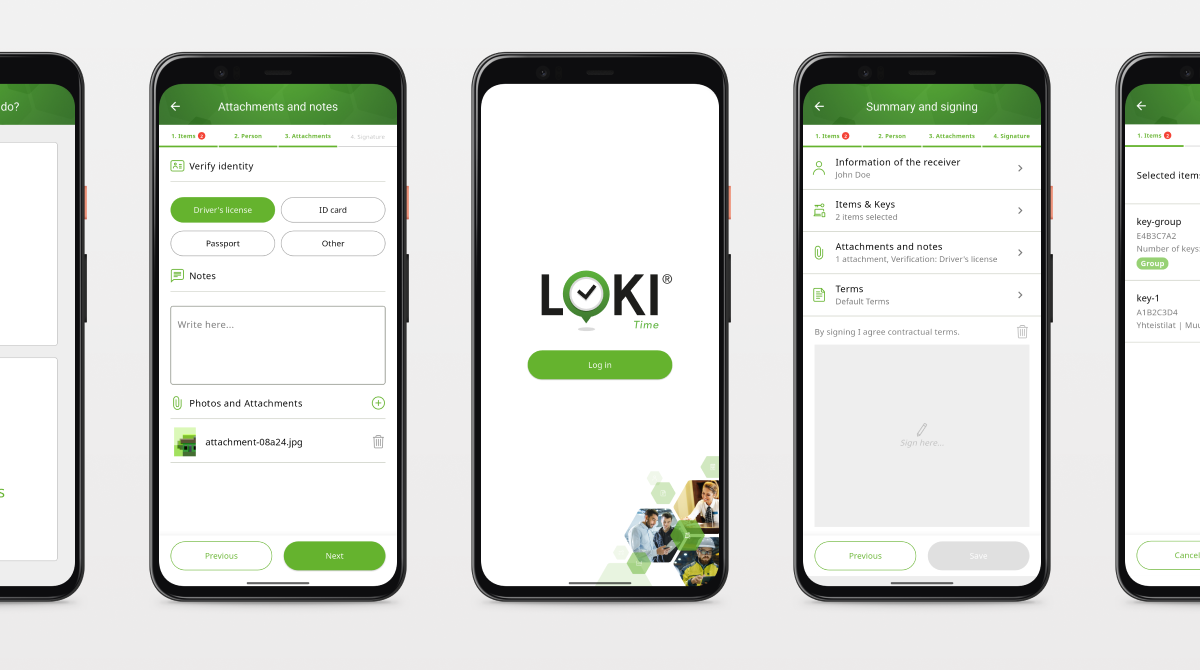
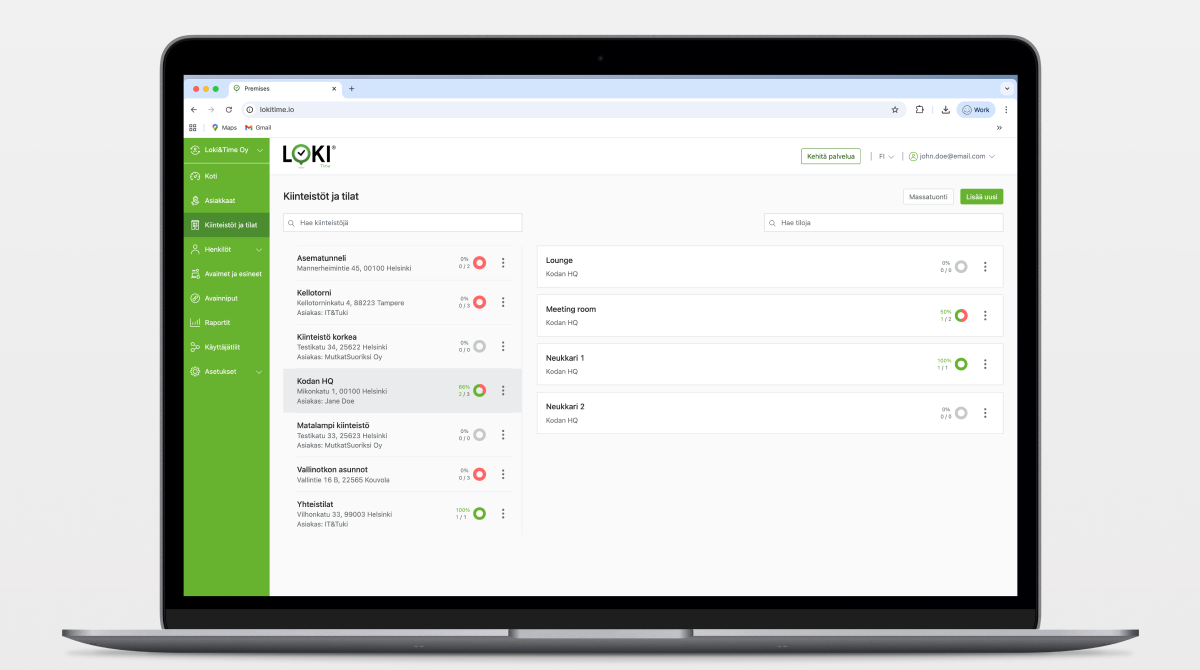
LokiTime’s service consists of a backend services, a browser app, and Android and iOS apps for smartphones and tablets, serving both end-users and admins. All of it is built, developed, and maintained by Kodan.
Other key results:
Finnish data residency achieved, enabling sales to regulated industries, including critical infrastructure operators
Usage grew nearly 10x since launch, and the platform didn't skip a beat
Key management expanded to cover all loanable assets, including laptops, phones, and tools, within the same workflow
NIS2 compliance built into the platform architecture
"With Kodan's help, we've been able to focus entirely on growing the product and bringing in new customers. I don't need to think about whether the technology is working. It just works. And whatever comes up, I know someone will take ownership of it."— Ari-Pekka Ojanen, Product Owner & Partner, LokiTime
How it was built
The project started by rebuilding the existing feature set in the new environment before adding anything new. This gave the team a clear starting point, early signal on architectural decisions, and kept existing customers on a stable system during the transition.
The platform is now built on a modern cloud stack hosted entirely within Finland, giving customers the data residency guarantees that regulated industries require.
As the platform matured, development shifted toward scalability and product expansion. Monitoring was built to catch problems before they reached users, and a feature flag system was introduced to manage rollouts across a growing, varied customer base.
Throughout, Kodan contributed technical expertise while LokiTime brought domain knowledge. Decisions were made collaboratively, and adjusted when real conditions pointed in a different direction.
Today, LokiTime and Kodan have also integrated modern AI tools into their daily development process. Product owners can build, test, and iterate on new ideas using an AI-powered testing environment, while the development team uses a Claude Code -based workflow for faster implementation and quality control. In addition to Claude Code tools, the team also uses Rovo for effective ticket and requirement handling.
Collaboration
The working model from the start was close and direct. From the beginning, both teams were in contact daily, working through problems together rather than passing requirements back and forth.
Both sides were willing to challenge each other's ideas. Technical constraints were communicated clearly. When something wasn't working, it was addressed directly.
LokiTime continues to develop the platform with Kodan, expanding into new sectors and countries, and adding capabilities as the product grows.
"I didn't really notice the boundary between companies in our day-to-day work. We were just solving problems together."— Nikolas Kohvakka, Kodan